Why Every Growing Business Needs a Procurement Checklist
As businesses grow, so do their operational demands. While informal purchasing may work for a small team, it often becomes inefficient as the organization expands. What once seemed like a simple process can quickly lead to overspending, stock shortages, duplicate orders, and unnecessary delays when multiple departments, locations, or decision-makers are involved.
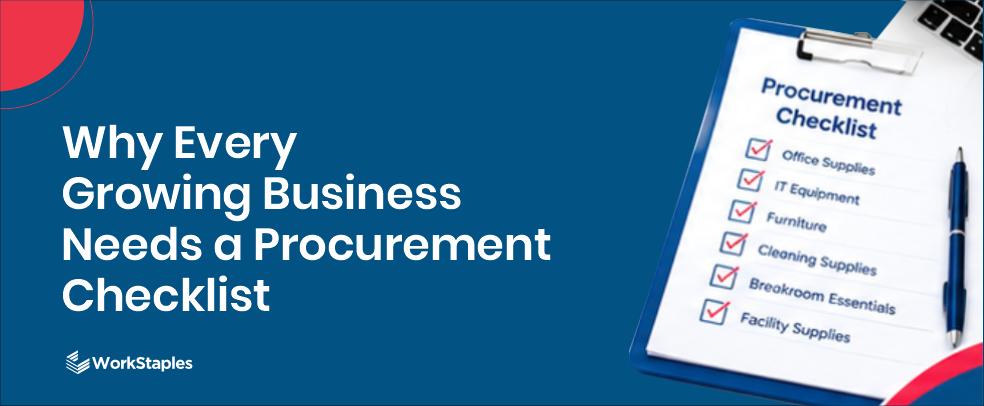
A well-structured procurement checklist helps bring order and consistency to your purchasing process. Rather than making buying decisions only when the need becomes urgent, businesses can plan ahead by organizing procurement into clear categories. For example, daily office essentials, monthly facility supplies, project-specific purchases, and one-time setup requirements can each have dedicated budgets, approval processes, and responsible personnel. This approach improves accountability while making purchasing more predictable.
Another essential practice is setting reorder thresholds for frequently used supplies. Everyday items such as copier paper, printer ink, pens, cleaning products, toiletries, and pantry essentials should never run out unexpectedly. By establishing minimum stock levels and monitoring inventory regularly, businesses can replenish supplies before they become critical, ensuring uninterrupted operations and reducing costly emergency purchases.
Effective procurement also depends on strong supplier management. Centralizing communication with trusted vendors simplifies the purchasing process, reduces confusion, and helps maintain consistent pricing and service quality. Keeping a standardized request list readily available enables teams to request quotations quickly and accurately whenever supplies are needed.
For many modern businesses, speed is just as important as organization. Leveraging a WhatsApp-first procurement process allows teams to communicate directly with a trusted supplier, receive quotations promptly, confirm orders, and track requests—all through a familiar and convenient platform. This streamlined approach reduces response times and keeps procurement moving without unnecessary paperwork or delays.
Ultimately, a procurement checklist is more than an administrative tool—it is a strategic asset. By planning purchases, maintaining optimal inventory levels, and working with reliable suppliers, businesses can improve efficiency, control costs, and create a purchasing process that scales alongside their growth.